Oil Prices Surge Above $116 as Attacks on Saudi Infrastructure Raise Supply Fears
Oil prices climbed sharply on Friday, ending the week at their highest levels in nearly six months as attacks on Saudi Arabian infrastructure and reports of an oil spill in the United Arab Emirates raised fresh concerns about Middle Eastern energy supplies.
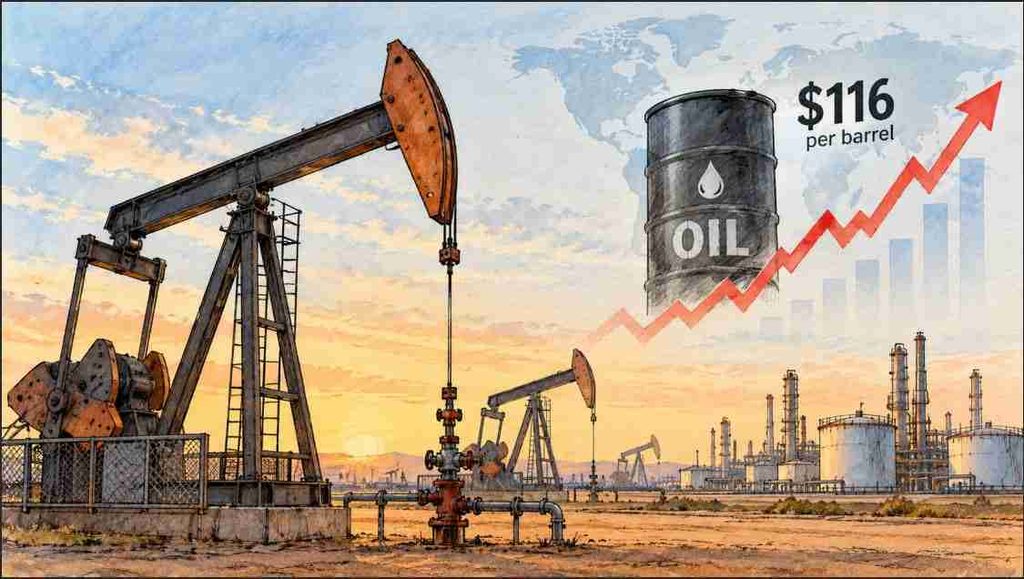
Brent crude, the international benchmark, settled at $116.72 a barrel, gaining $3.55, or 3.14%, during Friday’s session.
US West Texas Intermediate crude rose $3.80, or 3.8%, to close at $103.27 a barrel.
The rally came as traders assessed the possibility of further disruptions to oil production and transportation in a region that remains central to global energy markets.
According to Reuters’ October 23 oil market report, the increase followed attacks by Houthi forces on Saudi infrastructure, alongside reports from UAE authorities of an oil spill.
The developments added to an already tense situation in the Middle East, where concerns about supply disruptions have kept crude prices elevated.
Why Oil Prices Are Rising Again
Oil markets respond not only to actual changes in production but also to the risk that supplies could be interrupted.
When traders believe that important production facilities, pipelines, or shipping routes may face disruptions, they often demand a higher price for crude.
That additional cost is sometimes described as a geopolitical risk premium.
The latest attacks have brought that concern back into focus.
Saudi Arabia is one of the world’s most important oil producers, and disruptions involving its energy infrastructure can have consequences far beyond the region.
Even when production continues, uncertainty about future shipments can influence prices.
The oil spill reported in the UAE has added another complication, although its broader effect on energy supplies remains uncertain.
For now, traders appear increasingly concerned about the possibility of further disruptions rather than assuming that regional tensions will ease quickly.
Brent Records Its Strongest Weekly Gain in Weeks
Friday’s rally wasn’t an isolated move.
Brent crude gained approximately 6.2% over the week, rising $6.86 a barrel and recording its strongest weekly advance since early September.
The benchmark also finished close to its postwar settlement high of $118.35, reached on March 31, according to MarketWatch’s analysis of Dow Jones Market Data.
That puts the market within striking distance of another significant price milestone.
Still, rising prices don’t necessarily mean a new high is inevitable.
Oil can reverse direction quickly if diplomatic developments reduce concerns about supply or if traders conclude that demand is weaker than expected.
The balance between geopolitical risk and global consumption will remain important in determining where prices go next.
Higher Oil Prices Could Complicate the Inflation Outlook
For consumers, higher crude prices can eventually translate into more expensive gasoline, diesel, and transportation.
Businesses are affected too.
Airlines, shipping companies, trucking operators, and manufacturers often face higher expenses when energy prices rise.
Some businesses can absorb those costs, but others may pass them on through higher prices.
That creates a challenge for central banks already trying to keep inflation under control.
If energy costs remain elevated for an extended period, they can contribute to broader price pressures, potentially making interest-rate decisions more difficult.
The impact will depend on how long prices remain high and whether businesses and consumers adjust their spending.
A short-lived oil spike is very different from a sustained period of expensive energy.
What Does This Mean for Energy Stocks?
Higher crude prices can benefit oil-producing companies by increasing the revenue they receive for each barrel sold.
But the relationship between oil prices and energy stocks isn’t always straightforward.
Production costs, debt levels, hedging arrangements, and company-specific decisions can all influence profitability.
Refiners may face a different set of pressures, depending on the prices they pay for crude and the margins they earn on gasoline, diesel, and other products.
For businesses outside the energy sector, rising oil prices are more often a cost concern.
Transportation companies and manufacturers with significant fuel requirements may be particularly sensitive to sustained increases.
Investors therefore need to look beyond the headline price of crude when evaluating individual companies.
What Could Happen Next?
The immediate focus will remain on developments in the Middle East.
Further attacks or evidence of significant supply interruptions could keep upward pressure on prices.
On the other hand, diplomatic progress or signs that production and transportation are continuing without major disruption could ease some of the market’s concerns.
Traders will also be watching global demand, US inventory data, and the response of major oil-producing countries.
At $116.72 a barrel, Brent is already trading at a level that can influence expectations about inflation, corporate profits, and consumer spending.
Whether the latest rally continues will depend on how those forces develop.
For now, oil has returned to the center of the financial market conversation, and its next move could matter well beyond the energy sector.